New players enter a product with many valuable paths, but the first session does not clearly answer: “What should I do first?”
The challenge was not adding more features. It was making the first choice feel obvious.
info@aroanadesign.com
Projects / Chess.com
New players enter a product with many valuable paths, but the first session does not clearly answer: “What should I do first?”
The challenge was not adding more features. It was making the first choice feel obvious.
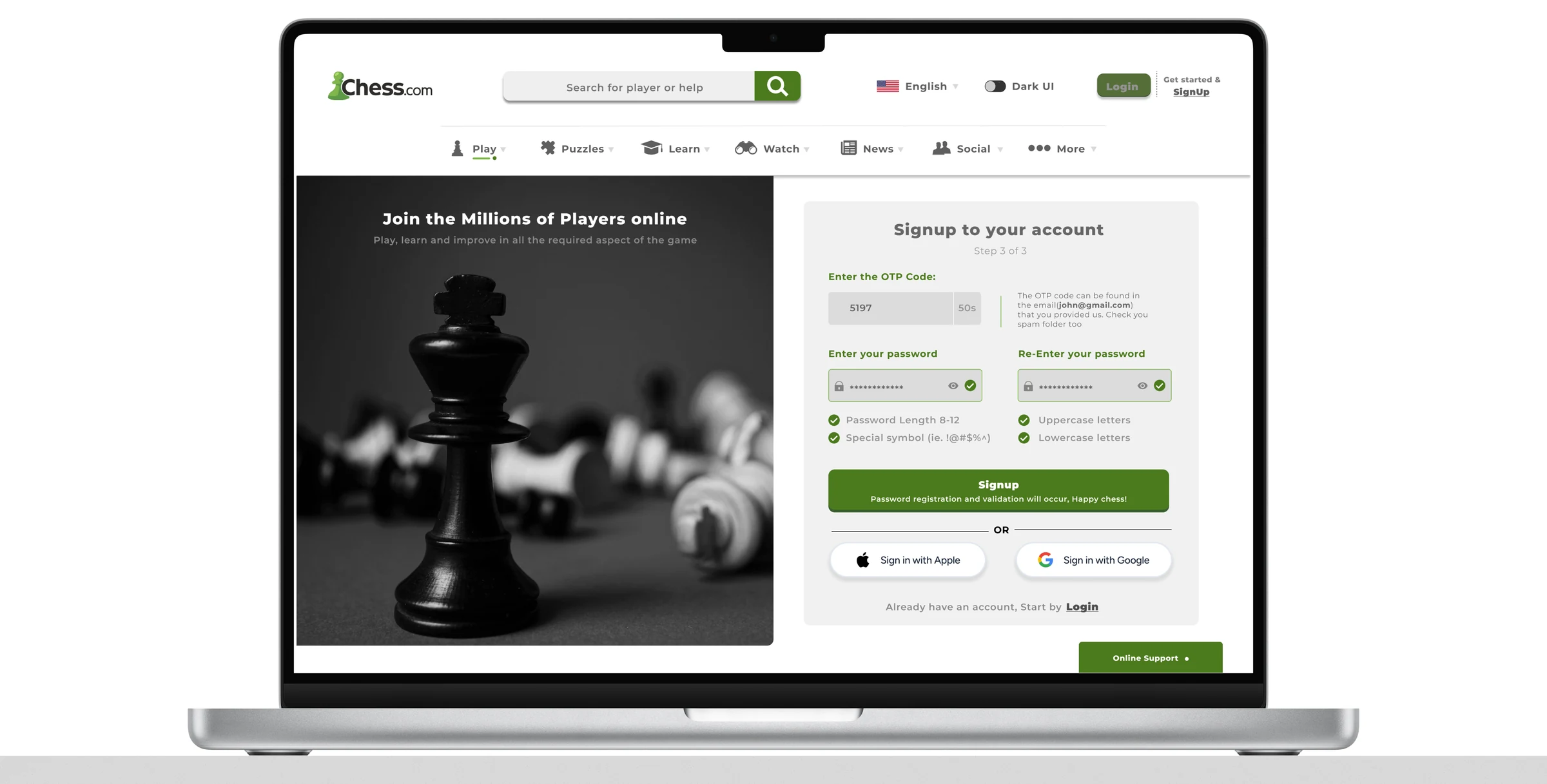
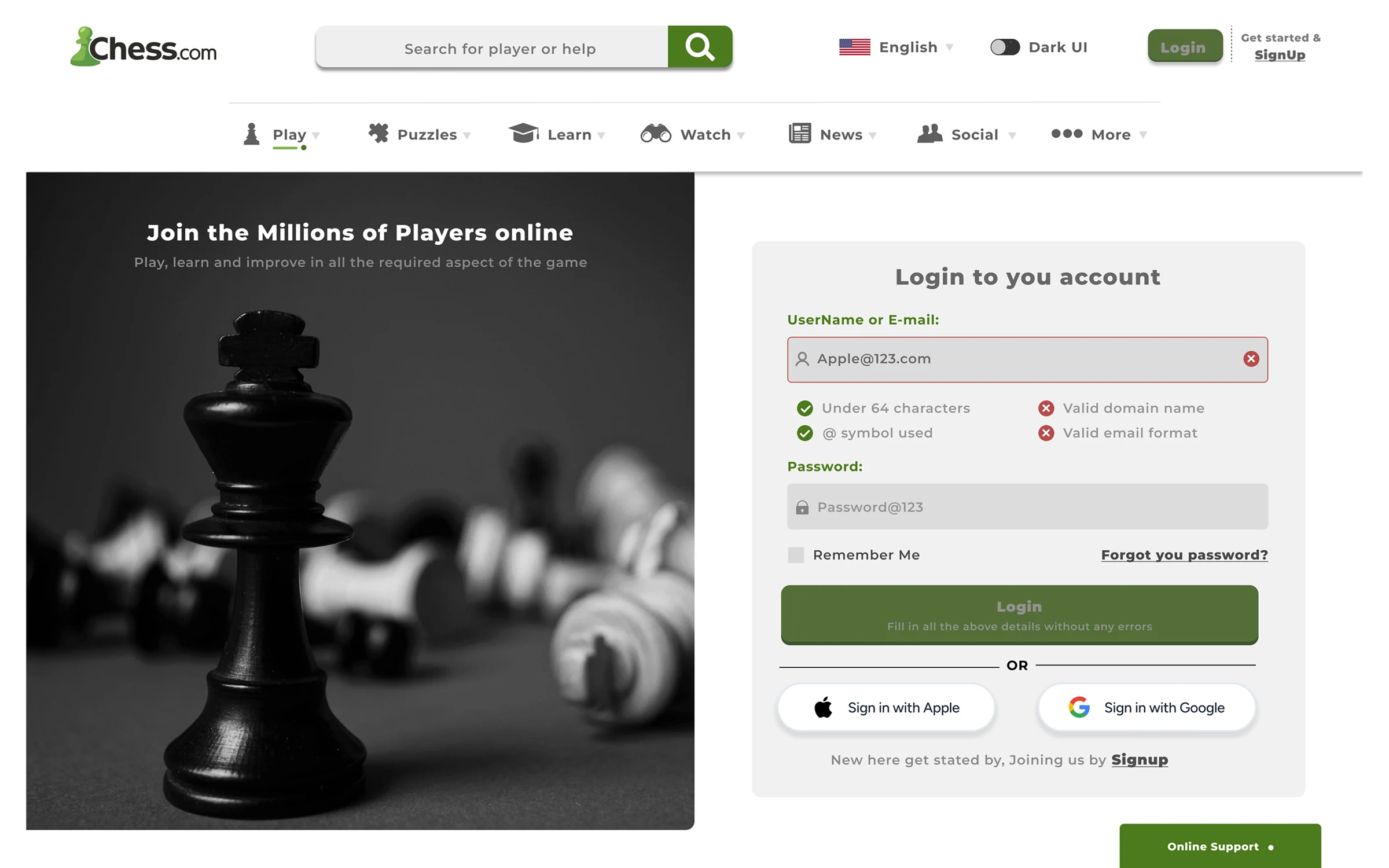
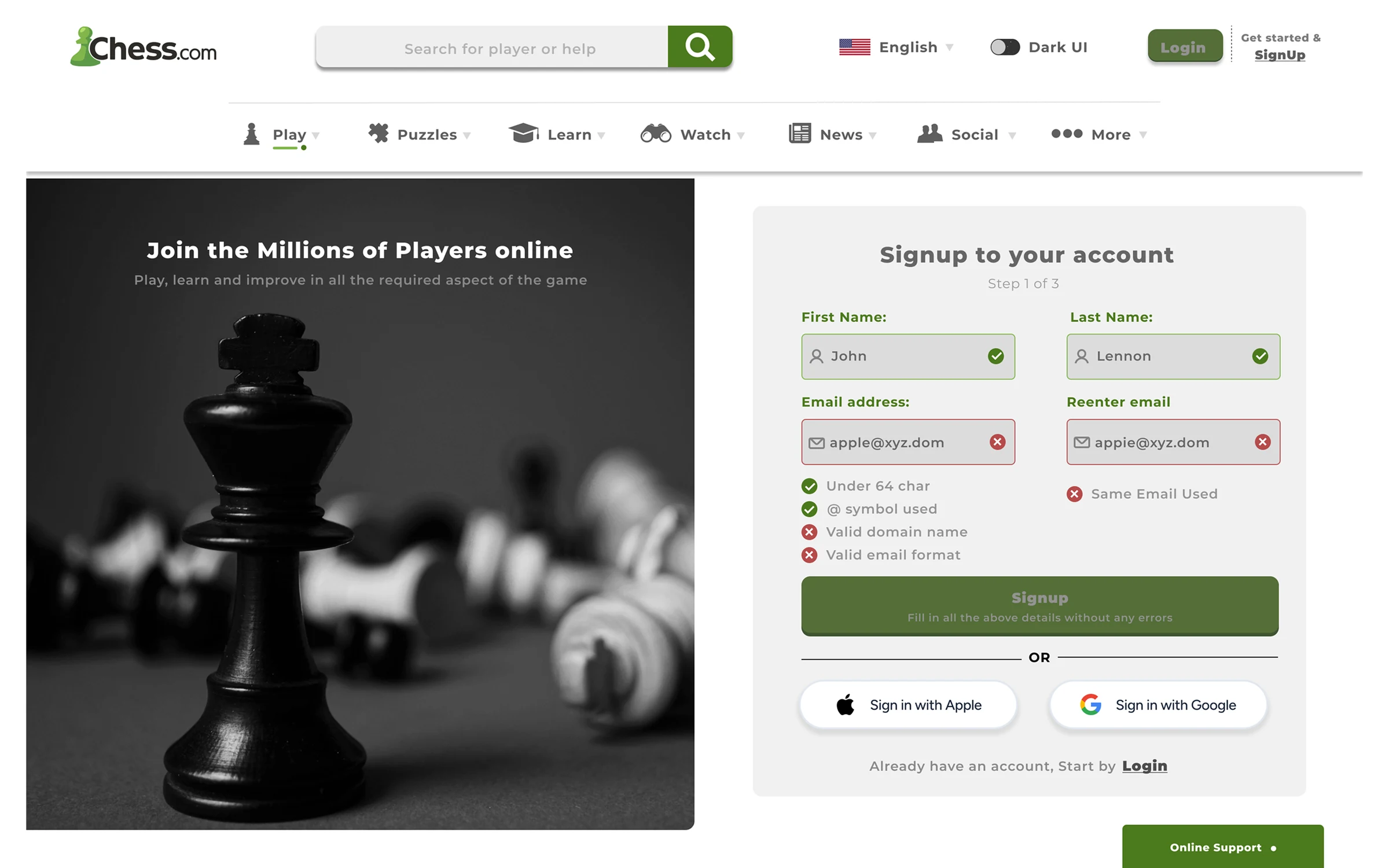
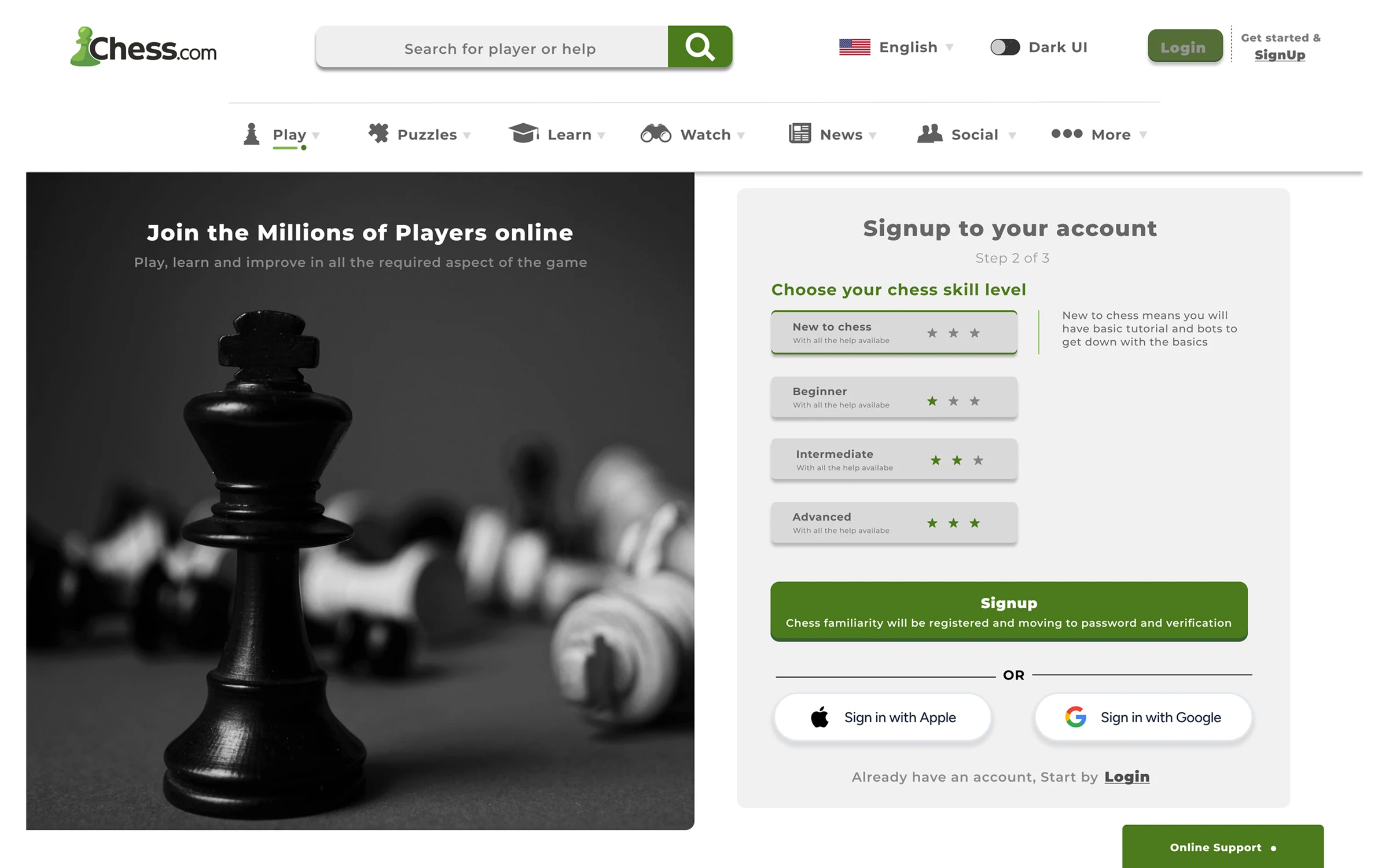
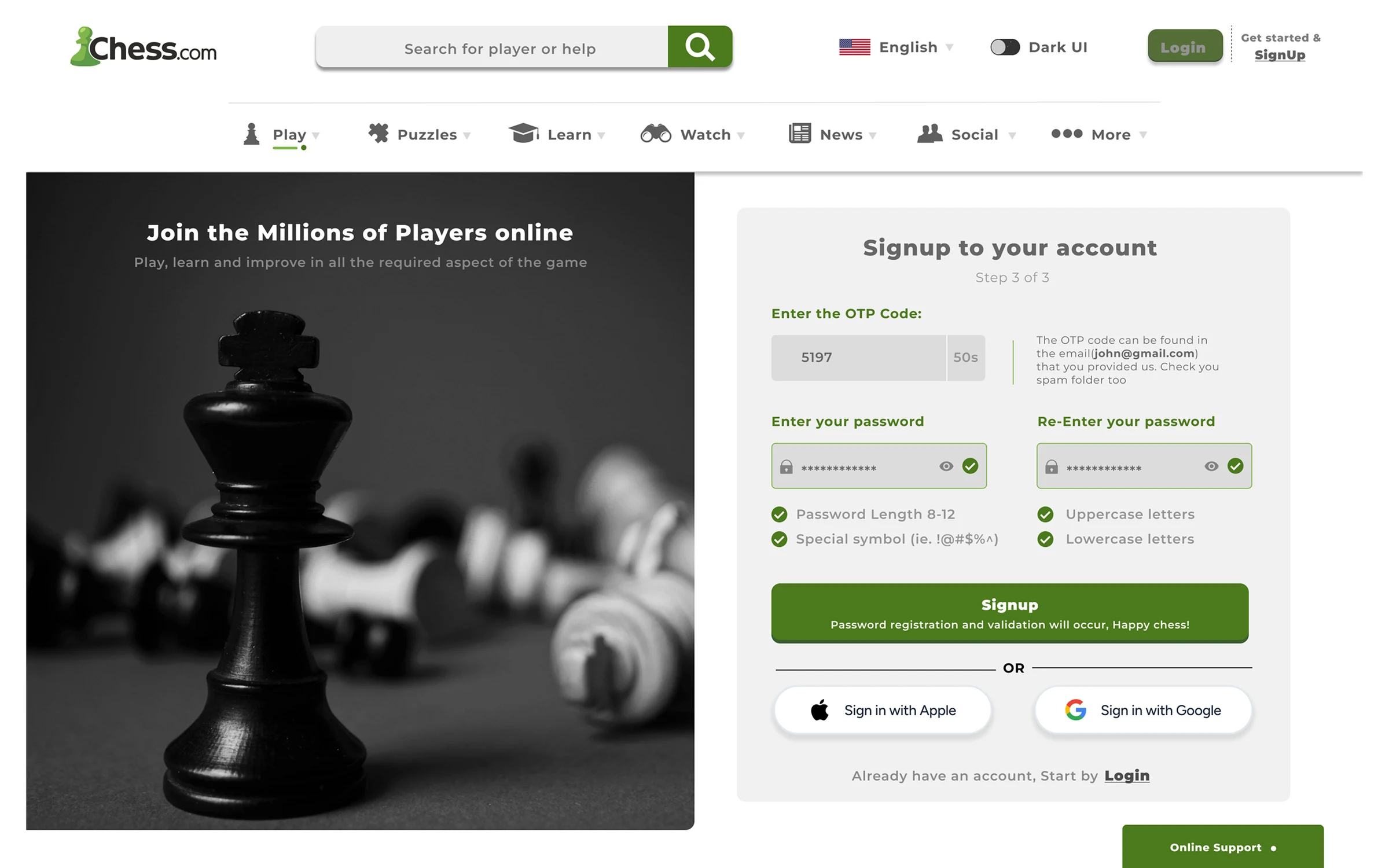
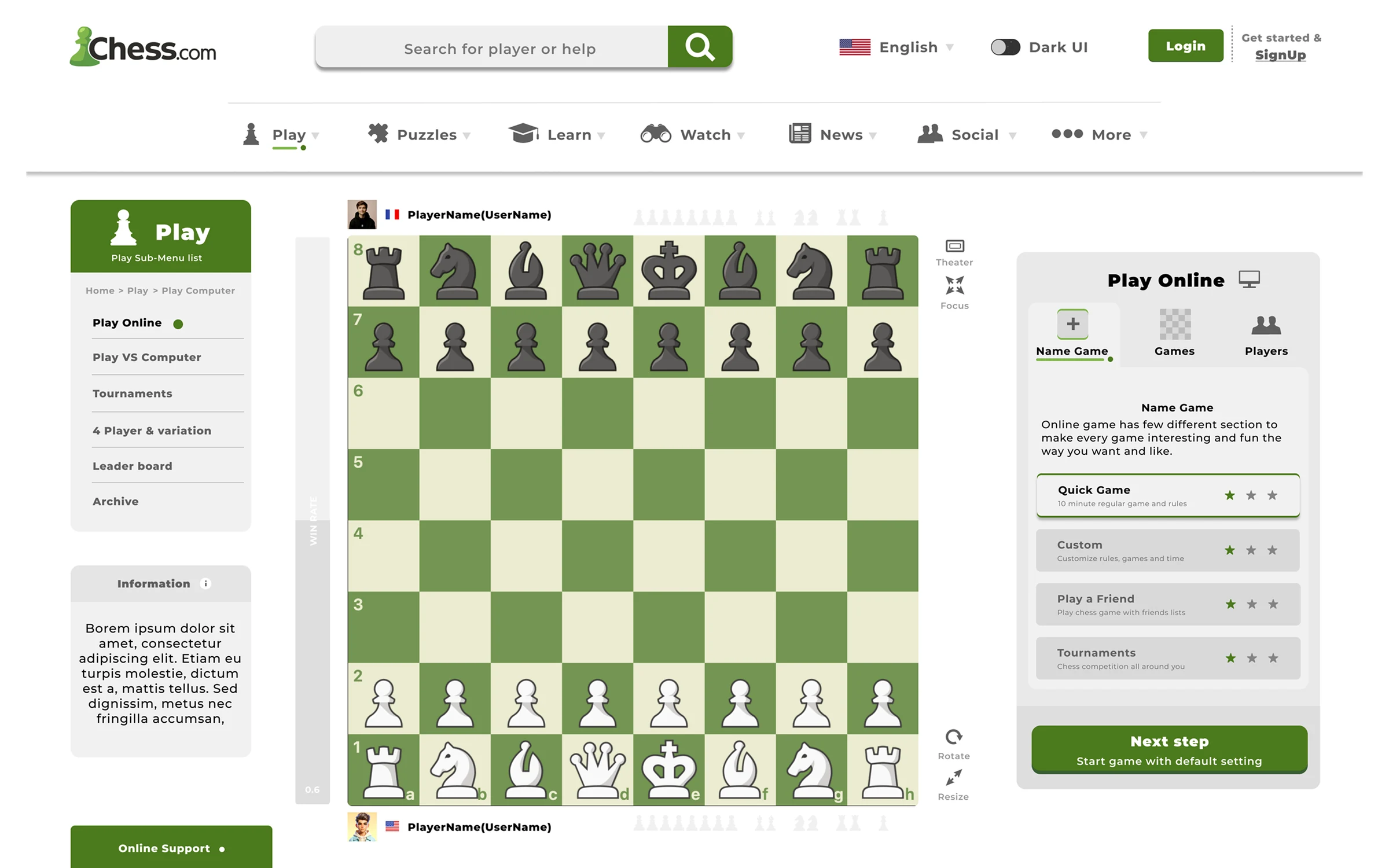
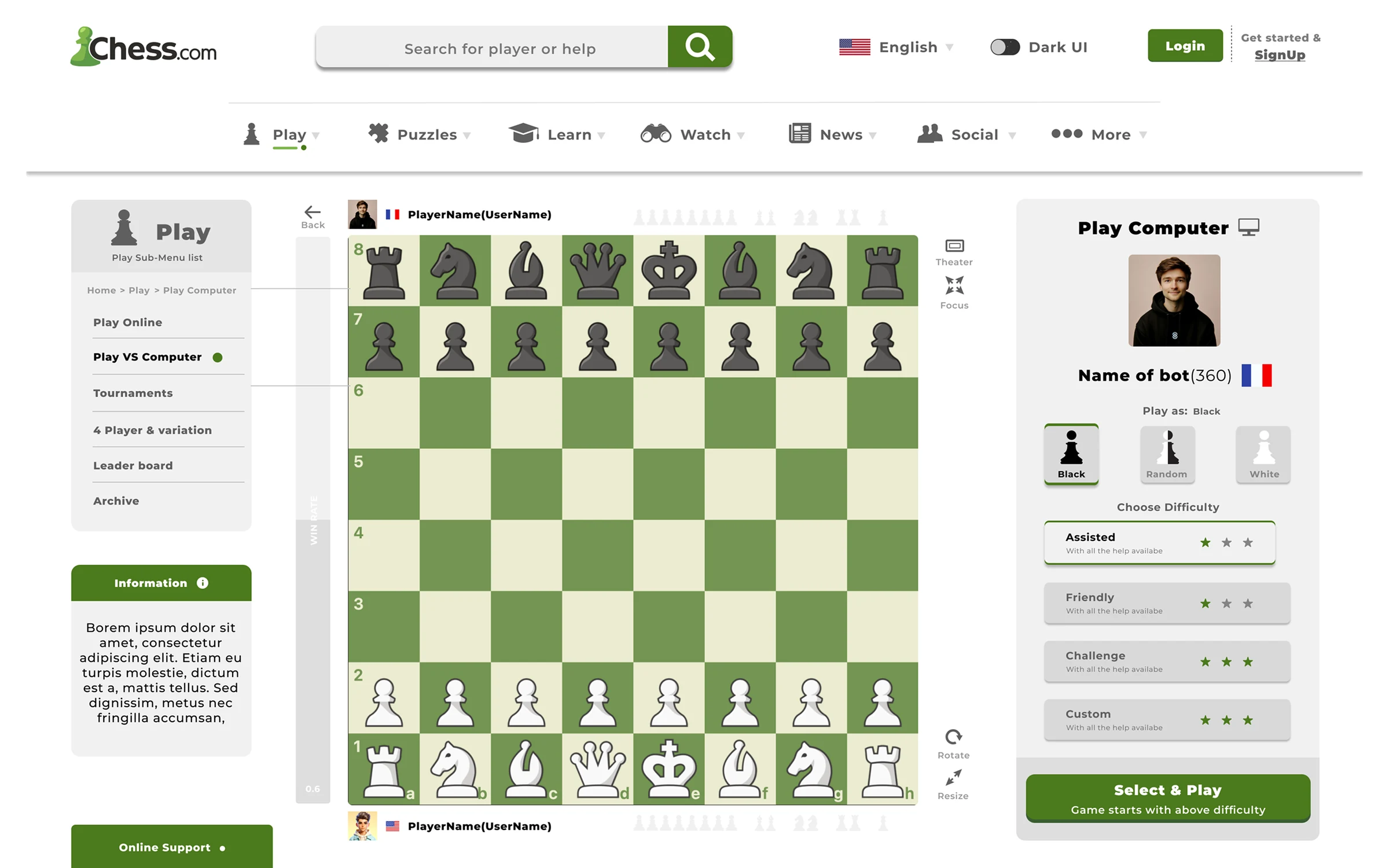
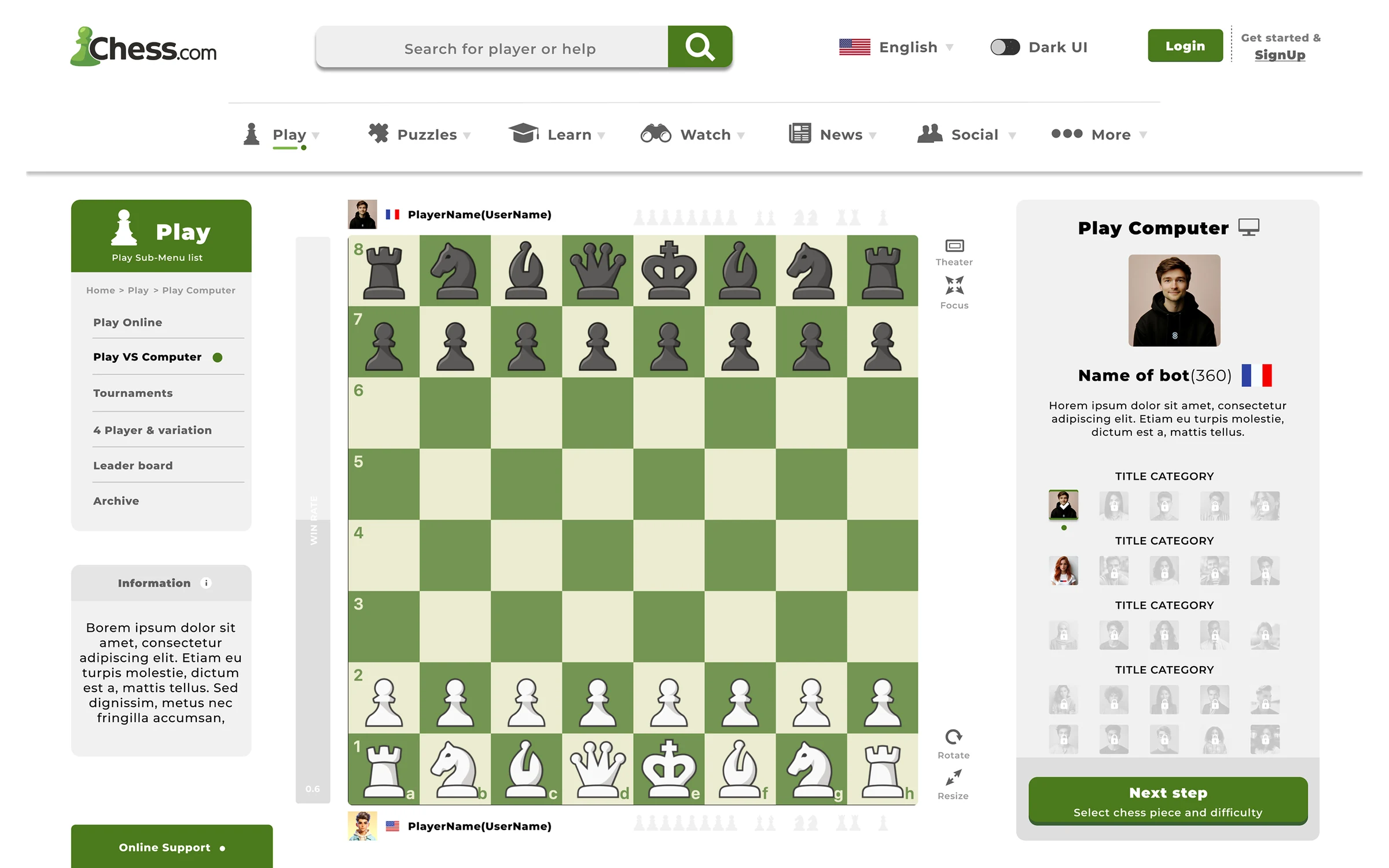
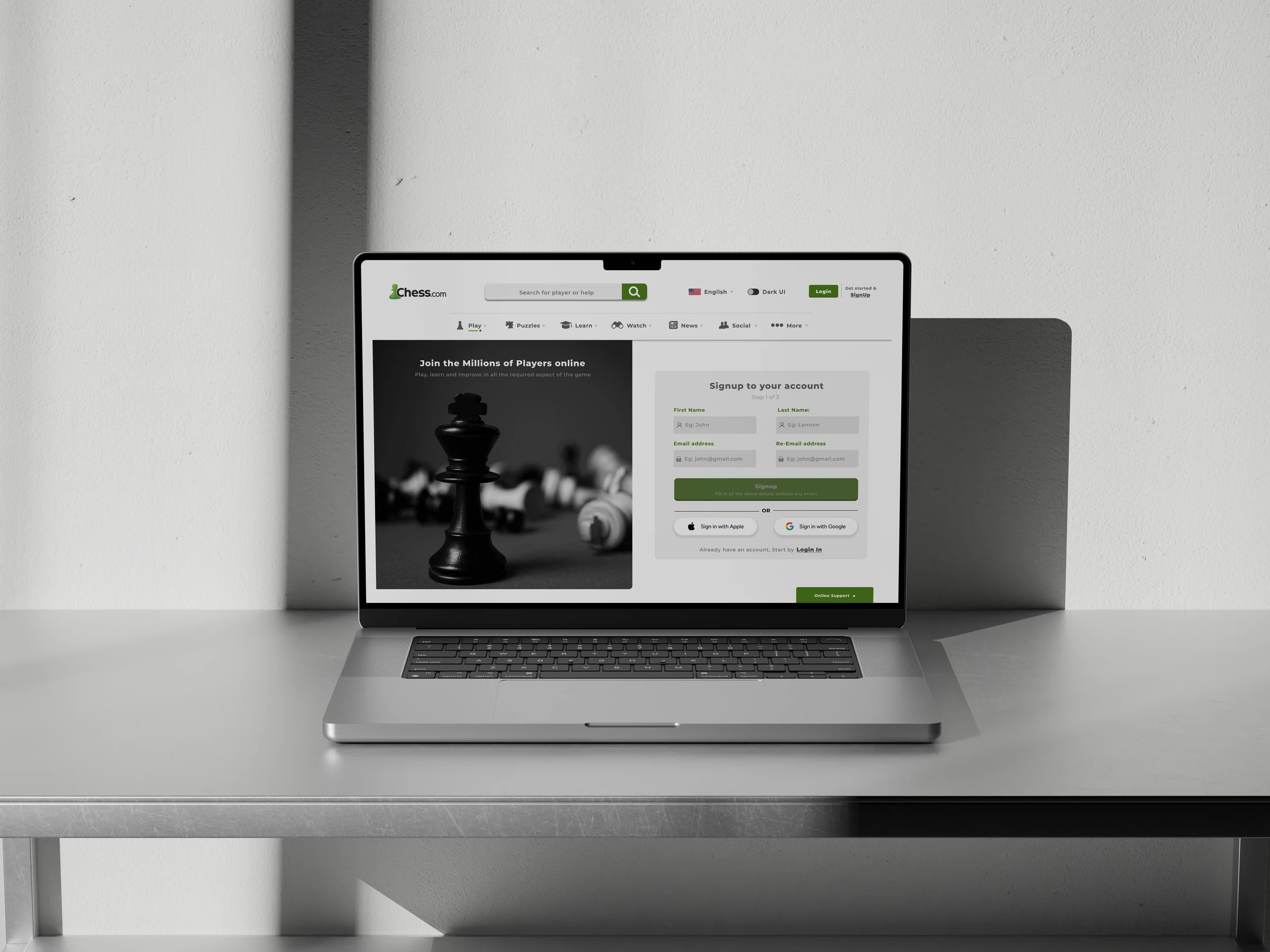
Redesign onboarding around intent: play, learn, practice, or improve — then guide users into the right first action.
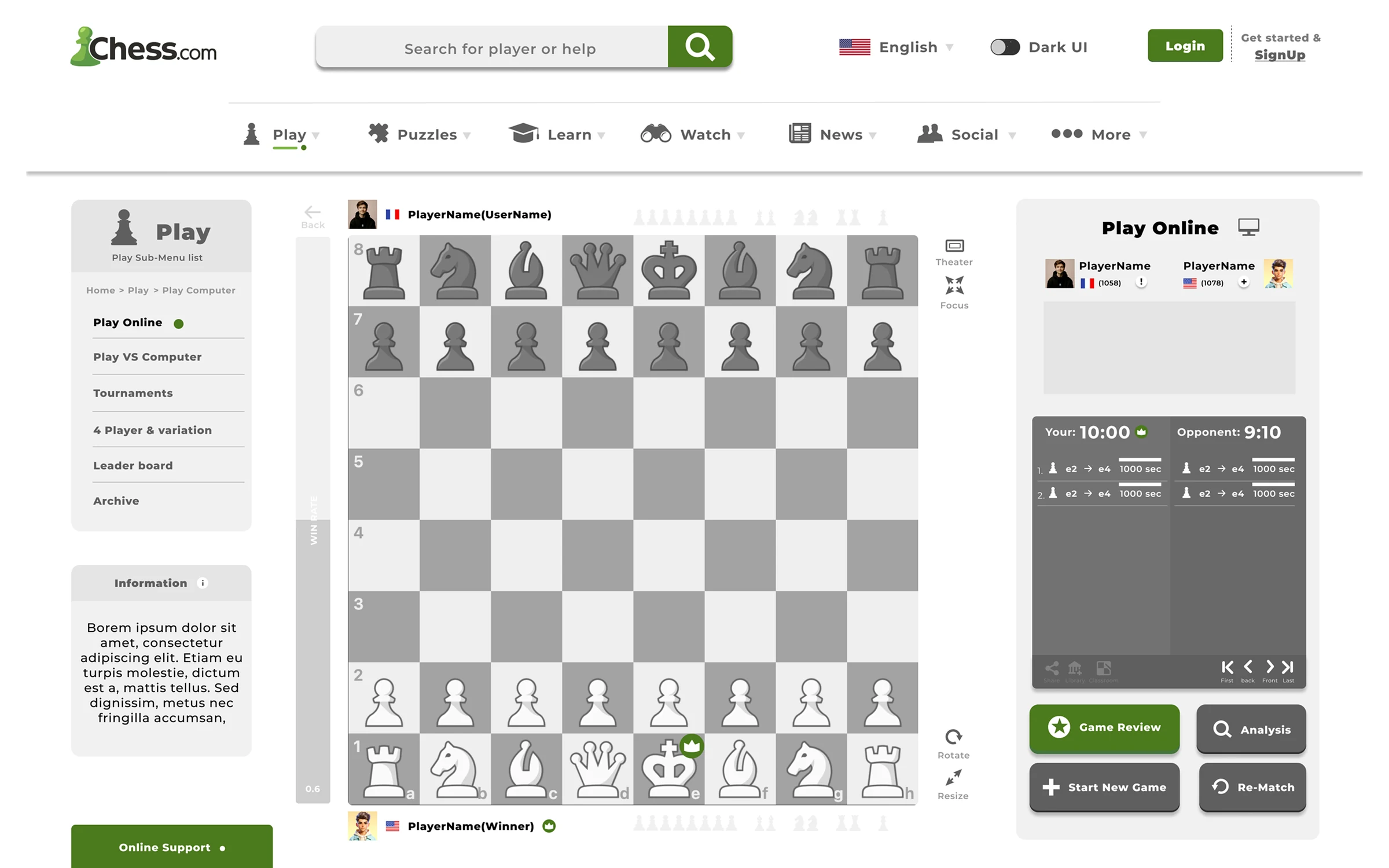
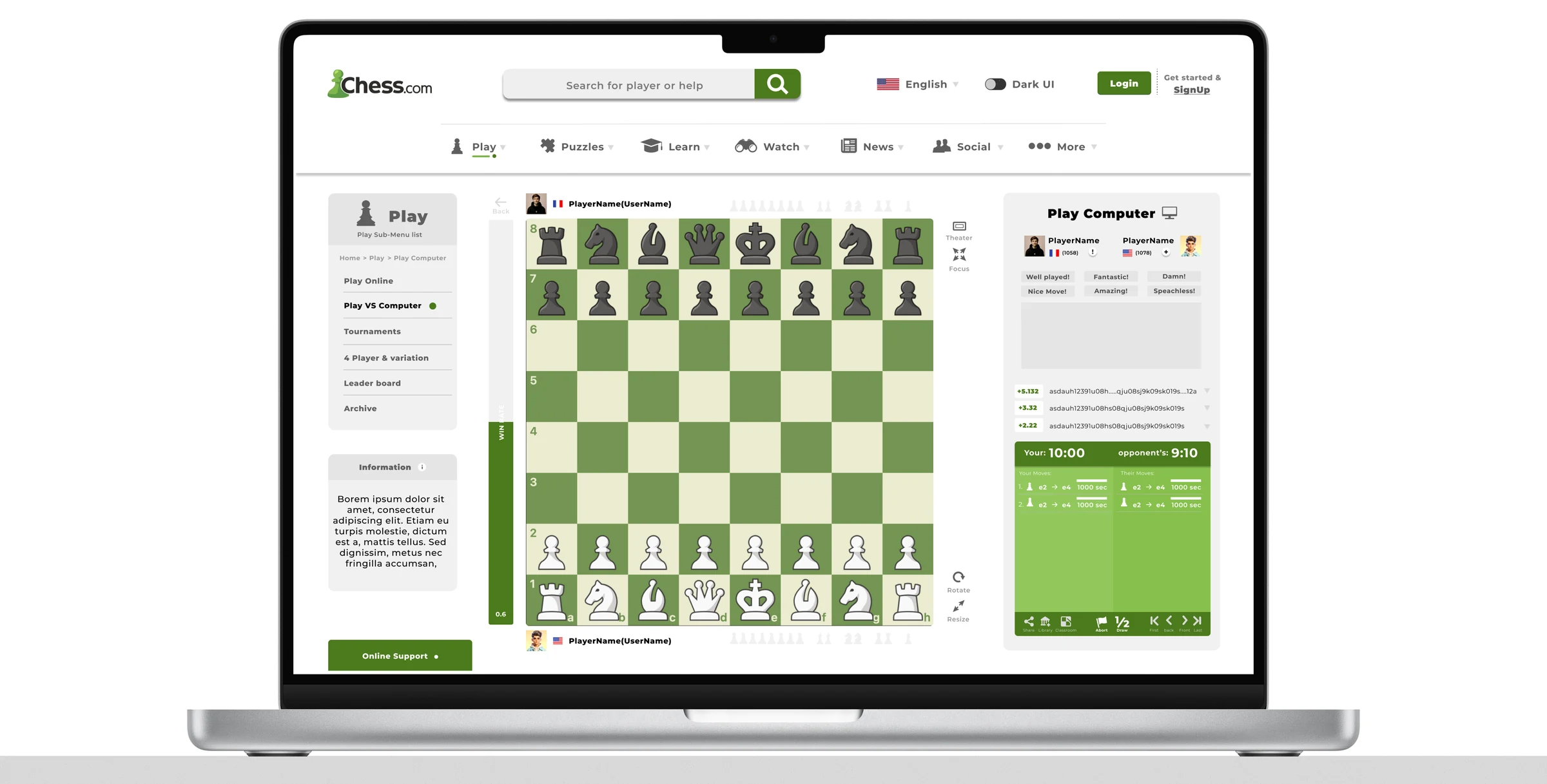
The redesign turns onboarding from a feature tour into a first-session decision helper.
Chess.com has strong features for different user types, but first-time users need help understanding which path matches their current confidence and goal.
Showing everything at once increases freedom, but it also creates uncertainty for beginners who do not yet know what “good progress” looks like.
I organized the entry experience around a few high-signal questions and recommended paths, allowing users to start with bots, puzzles, lessons, or live play based on their intent.
The first session should create a small win. That means recommending an achievable path before introducing deeper features like analysis, ratings, or advanced learning systems.
The strongest onboarding is not the one that asks the most questions. It is the one that helps users feel understood quickly and then gets them into meaningful action.
Since this is a concept case study, these metrics are framed as measurable targets from usability testing.
Onboarding is not about explaining the whole product. It is about helping someone feel the reason to continue.